
Resistance Bands: Types, How to Choose and Exercises
Resistance bands are stretchy elastic bands that add resistance to exercises, so you can build strength at home without heavy equipment. They are cheap, light and easy to store, and they work for beginners as well as for people who are already training.
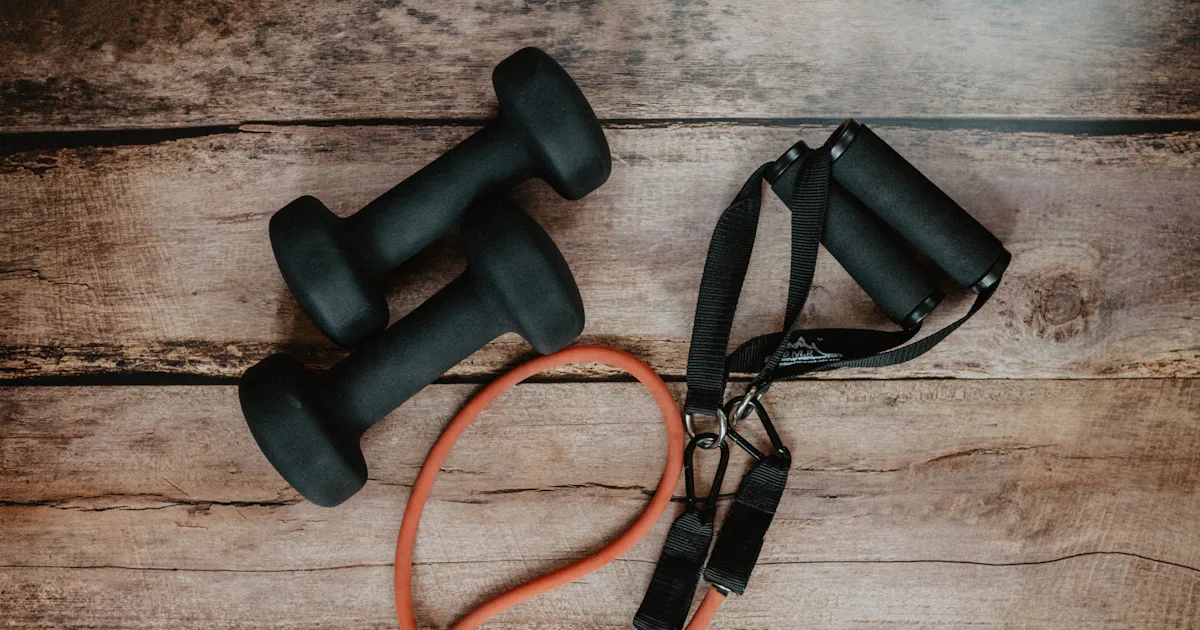
Start with a set of resistance bands in light to medium strengths: loop bands are the most versatile, and bands with handles are good for upper-body moves. Check the band for tears before every use, anchor it securely and focus on form before adding resistance. Beginners can do two or three sets of 8 to 15 repetitions of simple moves such as squats, rows and presses. Stop if you feel sharp pain, and talk to a doctor or physical therapist if you are recovering from an injury.
Resistance bands are stretchy elastic bands that add resistance to exercises, so you can build strength at home without heavy equipment. They are cheap, light and easy to store, and they work for beginners as well as for people who are already training.
This guide explains the main types of resistance bands, how to choose the right strength and set, how to use them safely, and which resistance band exercises and workouts are good to start with. It is part of our home fitness guide.
Quick answer
Start with a set of resistance bands in light to medium strengths: loop bands are the most versatile, and bands with handles are good for upper-body moves. Check the band for tears before every use, anchor it securely and focus on form before adding resistance. Beginners can do two or three sets of 8 to 15 repetitions of simple moves such as squats, rows and presses. Stop if you feel sharp pain, and talk to a doctor or physical therapist if you are recovering from an injury.
Why use resistance bands?
Healthline's guide to how to use resistance bands, reviewed by a physical therapist, says bands can improve strength, range of motion and joint stability, and that they are portable and widely used in rehab. WebMD describes bands as a low-resistance, beginner-friendly way into strength training.
They are not a perfect replacement for all gym equipment. Very strong people may need heavier resistance than bands provide, and bands can snap or slip if they are worn or poorly anchored. For most people at home they are a practical, low-cost start.
How much strength training do you need? The CDC says adults should do muscle-strengthening activity at least two days a week, working all the major muscle groups: legs, hips, back, abdomen, chest, shoulders and arms. Resistance band workouts can help you reach that.
Types of resistance bands
According to Healthline, the most common types are:
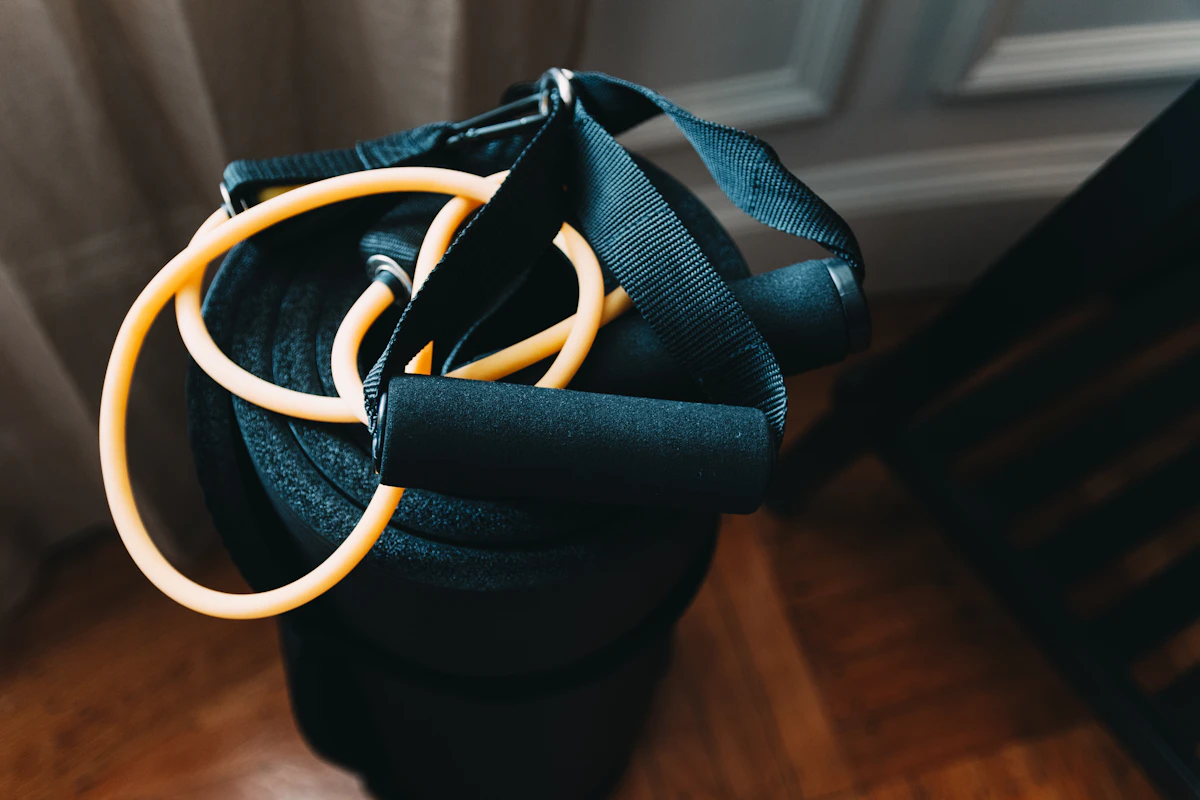
- Standard (long) bands. Long continuous or tied bands of elastic that you loop or hold.
- Loop bands. A closed loop of elastic. Thicker, heavier loops are sometimes called power bands or superbands, and smaller, lighter ones are called mini bands. A 3-piece resistance band set usually contains three loops of different strengths.
- Handled bands (tube bands). Tubes of elastic with a handle on each end. They are usually a bit pricier and feel like cable machines at the gym.
WebMD describes bands as flat loops or thin tubes with handles, and says loop bands suit full-body moves.
Materials
Bands are made of natural latex or rubber, and also of cotton, polyester or foam, depending on the type. If you have a latex allergy, check the label before buying. A fabric (sleeved) band is often more comfortable on the skin and can last longer, but we did not find strong evidence on durability, so judge by the maker's description and reviews.
Resistance levels: how to choose the right strength
Bands come in levels from light to extra heavy, and thicker bands usually give more resistance. Healthline says multi-packs are often color-coded by strength, but we did not find evidence that colors mean the same thing across brands, so rely on the stated resistance, not on the color. A blue extra-heavy resistance band from one maker may not match another's.
How to pick:
- If you are new or returning after a break, start with light or medium bands. Healthline says to start light if you are new or recovering.
- Choose the strength that lets you do 8 to 15 good repetitions. The last few should feel hard but your form should stay clean.
- Buy a set. Different muscles need different strengths: legs can handle heavier bands than shoulders.
Safety tips
- Inspect your bands every time. Healthline and WebMD both note that worn or damaged bands can snap. Look for small tears and replace a band that is damaged.
- Anchor securely. If you attach a band to a door or a foot, make sure it cannot slip.
- Avoid wrapping bands tightly around your hands. Healthline notes that gripping or wrapping can bruise or restrict circulation.
- Keep your form first. Increase resistance only when you can do the move smoothly.
- Stop for sharp pain. Some muscle burn is normal, but stop immediately for sudden or severe pain, as Healthline and WebMD both advise.
- Warm up and cool down. WebMD recommends both.
- Ask a professional if you have an injury, joint problems or a medical condition. Healthline suggests speaking with a trainer or physical therapist to build a plan that fits you.
Beginner resistance band exercises
Here is a simple set of resistance band exercises that covers the whole body. These are based on the moves listed by Healthline and WebMD.
| Exercise | Band type | Muscles |
|---|---|---|
| Banded squat | Loop band | Legs and glutes |
| Seated row | Handled or long band | Back and arms |
| Chest press | Handled or long band | Chest and arms |
| Band pull-apart | Loop or long band | Upper back and shoulders |
| Standing overhead press | Handled band | Shoulders |
| Standing biceps curl | Handled band | Arms |
How to do a beginner resistance band workout
- Warm up with a few minutes of walking or light movement.
- Choose 5 or 6 of the moves above.
- Do 2 or 3 sets of 8 to 15 repetitions of each, resting 15 to 60 seconds between sets. Healthline gives these ranges for repetitions and rest.
- Keep the band tight but not stretched to the limit at the start, with little slack.
- Cool down and stretch.
- Repeat on two or more non-consecutive days a week.
For a resistance band strength workout that is more challenging, add a set, use a heavier band or slow down the lowering part of each move. Resistance band training workouts can also be done as a circuit: go through the moves one after the other, rest, then repeat.
Resistance bands vs weights
Healthline says band training can build strength comparable to free weights for many people, but bands feel different: the resistance increases as the band stretches. Weights are easier to measure, and bands are easier to carry. Many people use both.
What to buy first
The best resistance bands for a beginner are simple ones in a few strengths, so start with a small set.
- A set of loop bands in three or four strengths for legs and hips.
- A handled set if you want upper-body exercises.
- A door anchor if you want rows and presses.
- A mat for comfort. See our guide to <!-- LINK when live: /us/home-fitness/best-yoga-mats | anchor: best yoga mats -->best yoga mats<!-- /LINK -->.
We choose by type and features, not by brand, so you can use this list in any store.
<!-- COMPARE CTA SLOT (CTA: compare, product line: Home fitness equipment). One row per need above (loop set, handled set, door anchor), rendered ONLY with an active merchant link via /go/{brand}, rel="sponsored nofollow noopener". With no active merchant, render nothing. No ratings, discounts or "clinically proven" badges. -->When to talk to a professional
Ask a doctor or physical therapist before you start if you have a heart condition, high blood pressure, recent surgery, an injury or joint pain, or if you are pregnant. Stop exercising and get medical help if you have chest pain, dizziness or severe pain.
FAQ
What are resistance bands good for?
Strength, joint stability and flexibility work at home or while travelling. They are also used in rehab under the guidance of a physical therapist.
Which resistance band is best for beginners?
A set of loop bands in light to medium strengths is a flexible starting point. Add handled bands for upper-body moves.
Are the colors the same on every brand?
No evidence says so. Check the stated resistance on the pack rather than the color.
How often should I use resistance bands?
Two or more days a week, with a rest day between sessions, in line with the CDC's muscle-strengthening guideline.
Can resistance bands build muscle?
They can build strength, and Healthline says gains can be comparable to free weights for many people. Progress depends on how hard you work and how consistently.
Do resistance bands break?
They can if they are worn, damaged or overstretched. Inspect them before each use and replace a band that shows tears.
This article is for general information and is not medical advice. Talk to a doctor or physical therapist before starting a new exercise program, especially if you have an injury or a health condition.
Frequently asked questions
This article is for informational purposes only and does not constitute medical advice, diagnosis or treatment. Always consult a qualified healthcare professional before starting any supplement, diet or exercise programme, especially if you are pregnant, nursing, taking medication or have a medical condition. Statements about supplements have not been evaluated by the Food and Drug Administration.
Feel Better With Us Editorial Team
Our editors research every guide from primary sources and update it when the evidence changes. Our editorial standards