
Skin CareQ&A
Gua Sha: What It Is, Does It Work and How to Use It
Gua sha is a traditional scraping technique that has become a popular facial massage. Used gently on the face, a gua sha tool may temporarily reduce puffiness and relax facial muscles. There is no good evidence that it builds collagen, removes wrinkles or permanently sculpts the face, and used too hard it can bruise.
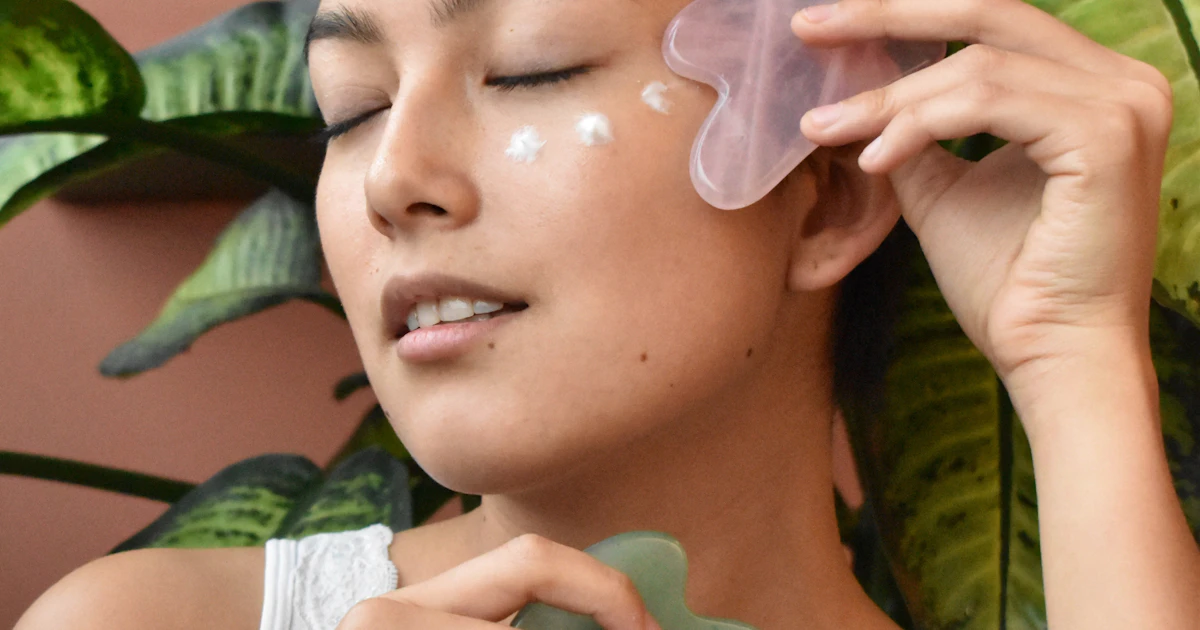
Gua sha is a massage technique in which you glide a smooth tool over skin with oil. For the face, use light pressure, enough oil or serum, and upward and outward strokes for a few minutes. Studies suggest a modest, mostly short-lived effect on puffiness and facial muscle tone; claims about collagen, lasting lifting or detox are not supported. Do not press hard: marks and bruises are not the goal. Skip it, or ask a dermatologist first, if you have rosacea, fragile blood vessels, active acne, eczema or broken skin, or recent fillers or injectables.
Gua sha is a traditional scraping technique that has become a popular facial massage. Used gently on the face, a gua sha tool may temporarily reduce puffiness and relax facial muscles. There is no good evidence that it builds collagen, removes wrinkles or permanently sculpts the face, and used too hard it can bruise.
This guide explains what gua sha is, what the research says (and where it is limited), how to do a gentle facial gua sha routine, who should avoid it and how to choose a tool. It is part of our skin care guide.
Quick answer
Gua sha is a massage technique in which you glide a smooth tool over skin with oil. For the face, use light pressure, enough oil or serum, and upward and outward strokes for a few minutes. Studies suggest a modest, mostly short-lived effect on puffiness and facial muscle tone; claims about collagen, lasting lifting or detox are not supported. Do not press hard: marks and bruises are not the goal. Skip it, or ask a dermatologist first, if you have rosacea, fragile blood vessels, active acne, eczema or broken skin, or recent fillers or injectables.
What is gua sha?
Dermatology Times describes gua sha as a traditional East Asian technique historically performed on the back and body with firm pressure, intentionally raising small red spots called petechiae. The facial version is a later adaptation that uses lighter pressure and a smooth tool made of jade, rose quartz, bian stone or stainless steel. The sources we read do not show any difference in results between materials.
Does gua sha work? What the research shows
The evidence is limited, and mostly editorial summaries of small studies.
-
Blood flow. A small 2007 pilot study of 11 healthy people used firm pressure on the back, not the face, and found about a fourfold rise in surface blood flow lasting around 25 minutes. It was small, uncontrolled and not about faces.
-
An 8-week randomized trial (2025). A trial in the Journal of Cosmetic Dermatology assigned 34 women aged 20 to 50 to a facial roller or gua sha, 10 minutes a day, 5 days a week, with facial oil. Both groups improved in facial contour. The gua sha group also showed lower facial muscle tone measures, while the roller group improved skin elasticity by about 8 percent. The gua sha group did not show a change in elasticity. Collagen was not measured, and the follow-up was only 8 weeks.
-
A 2023 review. Dermatology Times reports a review that found the evidence insufficient to support definitive anti-aging claims, citing small samples, short studies and weak controls.
What you can expect, according to Dermatology Times: a real but transient reduction in puffiness within minutes, from moving fluid under the skin, not a structural change.
What is not supported by these sources: lasting collagen stimulation, fat or bone remodeling, permanent jawline sculpting, permanent wrinkle reduction, or "detoxification." The sources also give no evidence that jade works better than steel.
How to use gua sha on the face
There is no standard technique backed by trials, but Dermatology Times advises light pressure and enough oil or serum. The trial above used 10-minute sessions five times a week after training.
- Start with clean skin and apply a facial oil or serum so the tool glides.
- Hold the tool at a low angle against the skin, almost flat.
- Use light pressure. You should feel a gentle glide, not a scrape.
- Stroke gently from the center of the face outward and upward, a few times on each area.
- Stop after a few minutes. More pressure or more time does not mean better results.
- Wash the tool after use and replace it if it chips or cracks.
Gua sha is an optional extra for your skin care routine, not a replacement for sunscreen, moisturizer or any treatment.
Gua sha massage tools: what to look for
- A smooth, rounded edge with no chips or sharp points.
- A size and shape that fits your hand and your face.
- A material that is easy to clean: stainless steel is simple to wash; stone should be wiped and dried.
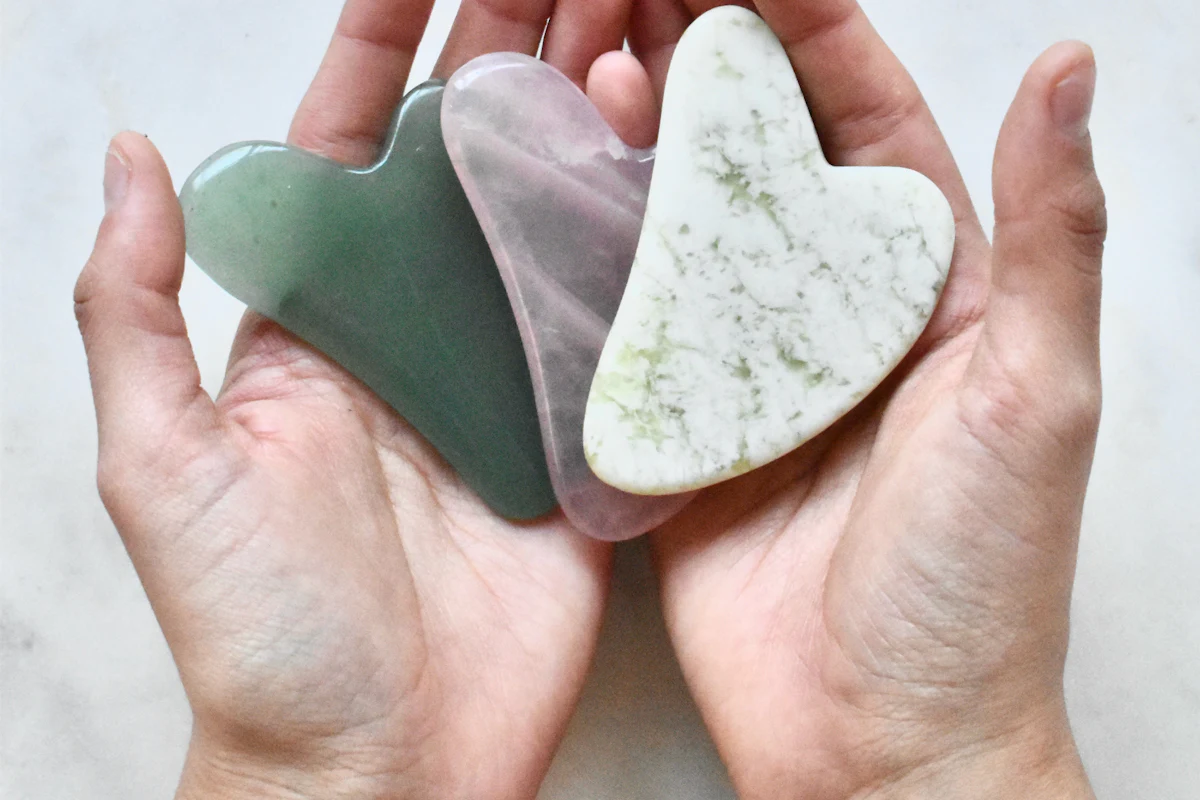
Choose by feel and ease of cleaning rather than claims. The sources we read do not compare materials.
Risks and who should avoid it
- Bruising and spots. Dermatology Times says the same force that leaves petechiae on the back more easily causes visible bruising on the face, and can lead to dark marks afterward.
- Fragile skin. People prone to rosacea, pigmentation or bruising, or with visible fine blood vessels, are more likely to be hurt; the article suggests gentler options such as ice rolling.
- Injectables. Wait and ask your provider if you recently had filler or neuromodulator injections, because pressure could move the product.
- Skin conditions. The sources we read do not cover eczema, acne or blood-thinning medicine, so ask a doctor or dermatologist if any applies to you, and do not use it on broken or irritated skin.
When to see a dermatologist
See a dermatologist if gua sha leaves marks that do not fade, if your skin becomes irritated or painful, or if you want treatment for persistent puffiness, rosacea or other skin concerns.
FAQ
Does gua sha work?
It may reduce puffiness for a short time and relax facial muscles, but there is no good evidence for collagen, lasting lifting or wrinkle removal.
How often should I use gua sha?
The one trial we read used 10 minutes, five days a week, with training. Gentle use a few times a week is a common approach, but there is no proven schedule.
How do I use a gua sha on my face?
Apply oil, use a flat angle and light pressure, and stroke from the center outward and upward for a few minutes.
Should gua sha leave marks?
No. Marks or bruises on the face mean too much pressure.
Is jade better than stainless steel?
We found no evidence that the material changes results. Choose a smooth, easy-to-clean tool.
Can I use gua sha every day?
Dermatology Times warns about vigorous, frequent use. Keep pressure light, and stop if your skin is red or sore.
Related guides: ceramides and the skin barrier and collagen and skin elasticity.
This article is for general information and is not medical advice. Talk to a dermatologist about skin conditions, bruising or injectables.
Frequently asked questions
This article is for informational purposes only and does not constitute medical advice, diagnosis or treatment. Always consult a qualified healthcare professional before starting any supplement, diet or exercise programme, especially if you are pregnant, nursing, taking medication or have a medical condition. Statements about supplements have not been evaluated by the Food and Drug Administration.
Feel Better With Us Editorial Team
Our editors research every guide from primary sources and update it when the evidence changes. Our editorial standards