
SleepComparison
Best Pillow for Side Sleepers: How to Choose
The best pillow for side sleepers is a medium-firm to firm pillow with enough height to fill the gap between your ear and your shoulder, so your head, neck and spine stay in a straight line. For most side sleepers that means a medium to high loft, usually at least 4 inches thick.

Pick a pillow tall enough to fill the space between your neck and the mattress (about 4 to 6 inches for most people, more for broad shoulders), medium-firm to firm, and made of memory foam, latex or an adjustable fill. If you wake with neck or shoulder pain, test a different height first. Persistent pain, numbness or tingling that does not improve should be checked by a doctor.
The best pillow for side sleepers is a medium-firm to firm pillow with enough height to fill the gap between your ear and your shoulder, so your head, neck and spine stay in a straight line. For most side sleepers that means a medium to high loft, usually at least 4 inches thick.
This guide explains how to choose the best pillows for side sleepers by loft, firmness and material, how to find the best pillow for side sleepers with neck pain, which types suit side and back sleepers, and how to know when your pillow no longer works. It is part of our sleep guide.
Quick answer
Pick a pillow tall enough to fill the space between your neck and the mattress (about 4 to 6 inches for most people, more for broad shoulders), medium-firm to firm, and made of memory foam, latex or an adjustable fill. If you wake with neck or shoulder pain, test a different height first. Persistent pain, numbness or tingling that does not improve should be checked by a doctor.
Why the pillow matters for side sleepers
When you lie on your side, your head sits higher than when you lie on your back, because your shoulder lifts your body. A pillow that is too low lets your head drop toward the mattress and bends your neck sideways. A pillow that is too high pushes your head up and also strains your neck. The right pillow fills that gap so your neck stays level with your spine.
Sleep Foundation's pillow guides say that side sleepers usually need a medium to high loft to keep the head, neck and spine in line, often at least 4 inches thick, and that people with broad shoulders may need more.
What to look for in a pillow for side sleepers
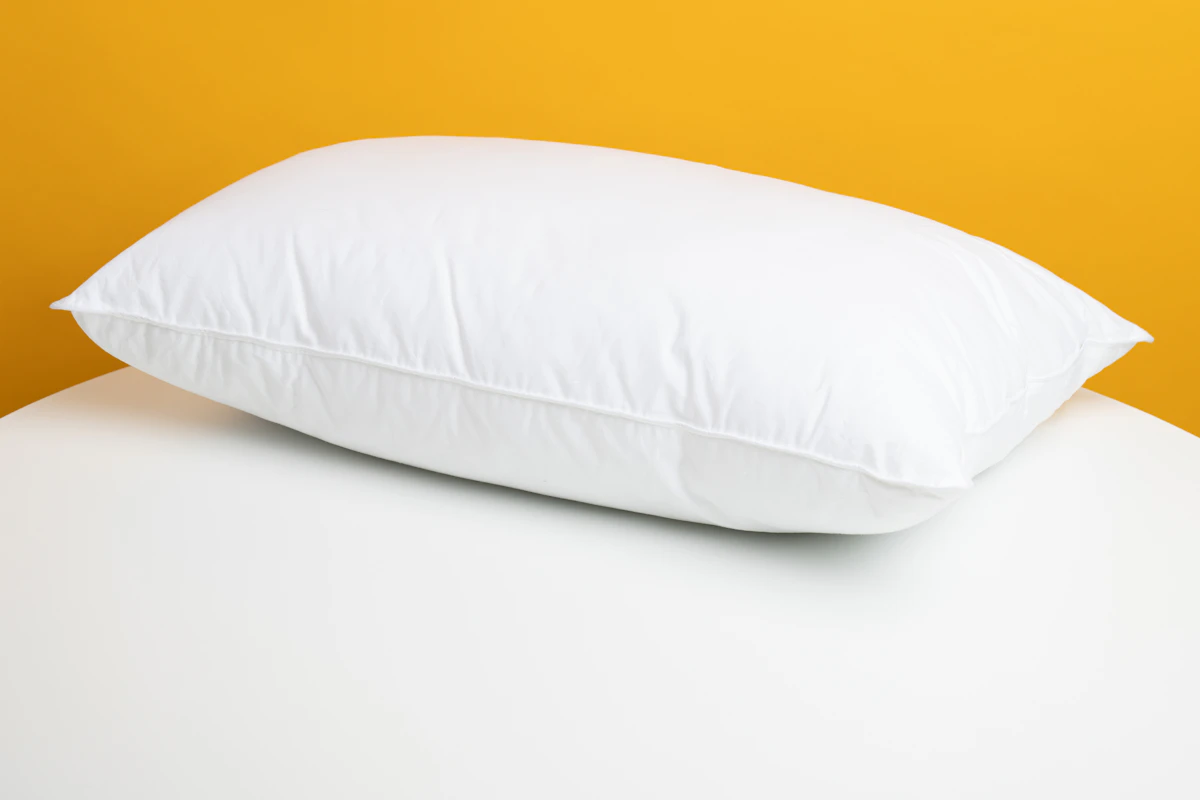
Loft (height)
Loft is the height of the pillow when you lie on it. Sleep Foundation groups loft into low (under 3 inches), medium (3 to 5 inches) and high (over 5 inches). Most side sleepers do best with medium to high loft. Your shoulder width and the softness of your mattress change this: a softer mattress lets your shoulder sink, so you may need a lower pillow.
Firmness
A medium-firm to firm pillow tends to give the best support for side sleepers, because it holds your head up as you lie. Sleep Foundation notes that a pillow that is too firm can create pressure where your head touches it, so choose firmness by comfort as well as support.
Material
- Memory foam: contours to your head and neck and keeps its shape. It can feel warm unless it has cooling features.
- Latex: bouncy, supportive and often more breathable than foam.
- Adjustable fill (shredded foam or latex): you can add or remove filling to find your ideal height. Sleep Foundation suggests that people who are unsure about their ideal height start with an adjustable pillow.
- Down and feather: soft, but they may not provide enough support or loft for side sleepers unless they are very full.
- Polyester fiberfill: inexpensive but flattens faster.
Cooling and allergies
If you sleep hot, look for gel-infused foam, perforated foam or latex. If you have allergies, a hypoallergenic cover and a washable pillow protector help.
Best pillows for side sleepers by need
<!-- COMPARE CTA SLOT (CTA: compare, product line: Sleep products). One row per need below, rendered ONLY with an active merchant link via /go/{brand}, rel="sponsored nofollow noopener". With no active merchant, render nothing. No ratings, discounts or "clinically proven" badges. -->We chose by type and features, not by brand, so you can use these criteria in any store.
Best pillow for side sleepers with neck pain
A best pillow for side sleepers with neck pain keeps the neck level, is not too high or too low, and supports without pushing the head forward. A contoured or adjustable pillow can help you find the right height. Pillows do not treat neck pain, and long-lasting pain, numbness or weakness in the arm or hand needs a doctor.
Best pillow for side and back sleepers
If you change position during the night, the best pillow for side and back sleepers is often an adjustable or medium-loft pillow, since back sleepers need a lower height than side sleepers. A pillow with two heights (one side higher than the other) or one you can adjust is a practical compromise.
For broad shoulders
You will usually need a higher pillow (over 5 inches or more). Adjustable fill makes it easier to get the height right.
For hot sleepers
Look for gel-infused or perforated memory foam, latex or a breathable cover.
For a small frame or a soft mattress
A lower loft (3 to 4 inches) may be enough, since your shoulder sinks deeper into a soft mattress.
Common mistakes side sleepers make with pillows
- Choosing by softness alone. A cloud-soft pillow feels great for a minute and then flattens, leaving your neck bent. Look at loft and support first, then comfort.
- Ignoring the mattress. A firm mattress keeps your shoulder up, so you need a taller pillow. A soft mattress lets your shoulder sink, so you may need a lower one. If you change your mattress, you may need to change your pillow too.
- Using a pillow that is too old. A pillow that has gone flat or lumpy no longer fills the gap, so replace it even if it looks fine.
- Buying a pillow made for back sleepers. Back-sleeper pillows are usually lower and will not fill the space for side sleeping.
- Skipping the trial period. Many people need a few nights to adjust. Buy from a store or brand with an easy return or trial policy, and use it for a week or two before judging.
Sleep Foundation's guide to shopping for pillows goes through these points in more detail, including how sleeping position, body size and mattress affect the best choice.
How to test a pillow
- Lie on your side with your head on the pillow. Your nose should line up with the center of your chest and your head should not tilt up or down.
- Check your shoulder. It should not feel pinched under you.
- Give it time. A new pillow can feel odd for a few nights. If it still hurts after one to two weeks, it may not suit you.
- Check the return policy before you buy, since pillows are personal.
Side sleeping tips
- Try a thin pillow between your knees to keep your hips aligned.
- Avoid stacking two flat pillows, which can slip and lose support.
- Keep your chin neutral, not tucked down.
- Replace your pillow when it no longer holds its shape, usually after one to three years depending on the material.
FAQ
What is the best pillow for side sleepers?
There is no single best pillow, but a medium-firm to firm pillow with a medium to high loft in memory foam, latex or adjustable fill suits most side sleepers.
How thick should a pillow be for side sleepers?
Usually at least 4 inches, and more (over 5 inches) if you have broad shoulders or a firm mattress.
Is a soft or firm pillow better for side sleeping?
Medium-firm to firm is usually better, since a very soft pillow may let your head sink and bend your neck.
Are down pillows good for side sleepers?
They are soft and comfortable but may not have enough loft or support for side sleepers unless the pillow is very full or you have a low-loft need.
How do I know if my pillow is wrong for me?
Waking with neck or shoulder pain, headaches, numb arms or having to fold or prop up the pillow are signs it may not fit.
How often should I replace my pillow?
When it flattens, lumps, loses support or smells, which can be after one to three years depending on the material.
Related guides: how temperature shapes sleep, sleep and joint pain and sleep guide.
This article is for general information and is not medical advice. Talk to a doctor about neck pain that persists, numbness or tingling.
Frequently asked questions
This article is for informational purposes only and does not constitute medical advice, diagnosis or treatment. Always consult a qualified healthcare professional before starting any supplement, diet or exercise programme, especially if you are pregnant, nursing, taking medication or have a medical condition. Statements about supplements have not been evaluated by the Food and Drug Administration.
Feel Better With Us Editorial Team
Our editors research every guide from primary sources and update it when the evidence changes. Our editorial standards