
Oral CareGuide
Tongue Scraper: Does It Work and How to Use One
A tongue scraper is a small tool that you pull gently across your tongue to remove the coating of bacteria, food debris and dead cells. It can make your mouth feel fresher and may help with bad breath, but it is an add-on to brushing and flossing, not a replacement for them.

A tongue scraper removes buildup from the surface of the tongue. Use it once or twice a day, after brushing, starting from the back of the tongue and pulling gently toward the tip, then rinse the tool. Scrapers cost less than about $10 and come in plastic, copper and stainless steel. They are generally considered safe if you use light pressure, but they cannot fix bad breath that comes from gum disease, cavities or a medical problem. See a dentist if your tongue has white, black or red patches or sores that last more than two weeks.
A tongue scraper is a small tool that you pull gently across your tongue to remove the coating of bacteria, food debris and dead cells. It can make your mouth feel fresher and may help with bad breath, but it is an add-on to brushing and flossing, not a replacement for them.
This guide explains what a tongue scraper does, what the research says (and where it is limited), how to use one step by step, how to choose between plastic, copper and stainless steel, and when a coated or sore tongue needs a dentist. It is part of our oral care guide.
Quick answer
A tongue scraper removes buildup from the surface of the tongue. Use it once or twice a day, after brushing, starting from the back of the tongue and pulling gently toward the tip, then rinse the tool. Scrapers cost less than about $10 and come in plastic, copper and stainless steel. They are generally considered safe if you use light pressure, but they cannot fix bad breath that comes from gum disease, cavities or a medical problem. See a dentist if your tongue has white, black or red patches or sores that last more than two weeks.
What does a tongue scraper do?
Your tongue has a rough surface that traps bacteria, food and dead cells. Cleveland Clinic's article on whether tongue scraping works quotes a dental hygienist who says the tongue can harbor bacteria that cause bad breath, tooth decay and gum infections. Her comparison: brushing the tongue is like scrubbing a carpet, while scraping is like scraping it clean.
People use a tongue scraper to:
- freshen breath;
- reduce the white or yellow coating on the tongue;
- improve the sense of taste (Healthline mentions an older study linking scraping to better taste);
- keep the mouth feeling cleaner overall.
Does tongue scraping really work?
The evidence points to a modest effect, and experts are careful about big promises.
- A Healthline guide to how to clean your tongue cites a 2006 Cochrane review in which scrapers reduced the sulfur compounds that cause odor more than toothbrushes did, but the effect was short-term. A 2004 study it describes found a scraper removed about 75% of these compounds, compared with about 45% for a toothbrush.
- The same page says the American Dental Association does not equate tongue cleaning with reduced bad breath, although it can help the mouth feel fresher.
- Healthline's page on tongue scraping says that scraping cannot replace brushing, and that a scrape in the morning will not prevent bad breath later in the day.
Put simply: a tongue scraper may help, especially if you have a coated tongue, but it is not a cure for chronic bad breath. For the causes of bad breath, see our guide to <!-- LINK when live: /us/oral-care/what-causes-bad-breath | anchor: what causes bad breath -->what causes bad breath<!-- /LINK -->.
How to use a tongue scraper
- Brush and floss first, then rinse with water. Cleveland Clinic suggests scraping as a quick last step, in the morning and at night.
- Stand at a mirror and stick your tongue out.
- Place the scraper at the back of your tongue, as far back as you can without gagging. If you gag easily, start in the middle and move a little farther back over time.
- Pull gently toward the tip. Use light pressure. It should not hurt. Never push backward.
- Rinse the scraper under warm water after each pass.
- Repeat once or twice, then rinse your mouth with water.
- Wash the scraper with warm water and soap, dry it and store it somewhere clean.
The whole routine usually takes under two minutes. Healthline suggests scraping when you brush your teeth at a minimum, and after meals if you want to target odor.
How to choose a tongue scraper
<!-- COMPARE CTA SLOT (CTA: compare, product line: Oral care products & devices). One row per material below, rendered ONLY with an active merchant link via /go/{brand}, rel="sponsored nofollow noopener". With no active merchant, render nothing. No ratings, discounts or "clinically proven" badges. -->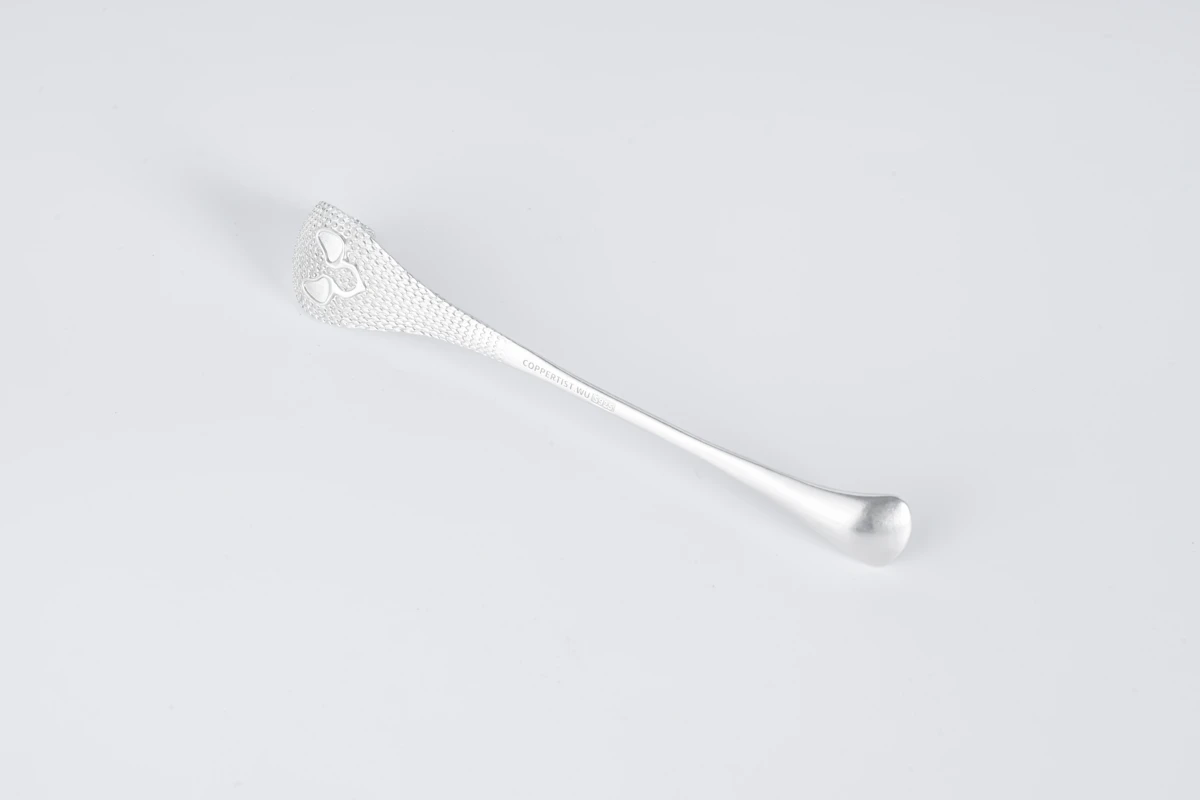
We choose by features, not by brand, so you can use these points in any store.
- Material. Plastic, copper and stainless steel are all sold. Healthline says metal is thought to last longer and is often dishwasher-safe, while plastic is cheaper but may need replacing sooner. Most scrapers cost under $10, according to both Cleveland Clinic and Healthline.
- Smooth edges. Check the edge before each use. A rough or uneven edge can cut the tongue.
- Shape. Many scrapers are a V-shape or a loop with a rounded edge. Choose one that fits your mouth and does not make you gag.
- Easy to clean. A one-piece design with no crevices is simpler to wash.
- Alternatives. A soft toothbrush can also clean the tongue, and some toothbrushes have a scraper on the back of the head. Healthline also mentions a spoon as a fallback. Scrapers are generally considered the most effective of the three.
Safety: who should be careful
- Gagging. This is the most common problem. Do not place the scraper too far back, and try scraping before breakfast if you gag.
- Cuts. Pressing too hard or using a damaged scraper can injure the tongue. Stop if it hurts or bleeds.
- Sore or discolored tongue. Do not scrape over sores or painful patches. Ask a dentist first.
When to see a dentist or doctor
Cleveland Clinic advises seeing a dentist if your tongue shows white, black or red discoloration, or if you have sores or pain that last more than two weeks. Healthline lists other reasons to be checked, such as white patches that do not wipe away, a smooth or glossy tongue, a hairy-looking tongue, chronic dry mouth, or lumps that last more than a few weeks.
Bad breath can also come from gum disease, cavities, dry mouth, sinus problems or other health conditions. If scraping and good brushing do not help, ask a dentist. See also our guide to <!-- LINK when live: /us/oral-care/mouthwash | anchor: mouthwash -->mouthwash<!-- /LINK -->.
FAQ
Does a tongue scraper really help bad breath?
It may help, and some studies found it removes more odor-causing compounds than a toothbrush, but the effect is short-term and the ADA does not equate tongue cleaning with reduced bad breath.
How often should you use a tongue scraper?
Once or twice a day, ideally after brushing. Cleveland Clinic suggests morning and night.
Should you scrape your tongue before or after brushing?
Cleveland Clinic suggests brushing, flossing and rinsing first, and scraping as a last step.
Which is better, a copper or stainless steel tongue scraper?
Both work. Healthline says metal scrapers are thought to last longer than plastic ones. Choose a smooth edge and a design that is comfortable.
Can a tongue scraper hurt your tongue?
It can if you press too hard or use a damaged scraper. Use light pressure and stop if it hurts.
Is it normal for the tongue to be white?
A thin coating is common, but white, black or red patches or sores lasting over two weeks should be checked by a dentist.
This article is for general information and is not medical advice. Talk to a dentist about persistent bad breath, a coated tongue or any sore on your tongue.
Frequently asked questions
This article is for informational purposes only and does not constitute medical advice, diagnosis or treatment. Always consult a qualified healthcare professional before starting any supplement, diet or exercise programme, especially if you are pregnant, nursing, taking medication or have a medical condition. Statements about supplements have not been evaluated by the Food and Drug Administration.
Feel Better With Us Editorial Team
Our editors research every guide from primary sources and update it when the evidence changes. Our editorial standards