
Stress, Mood & RelaxationGuide
L-Theanine: The Amino Acid That Produces Calm Focus
Found in tea, L-theanine produces a unique state of relaxed alertness backed by EEG evidence.
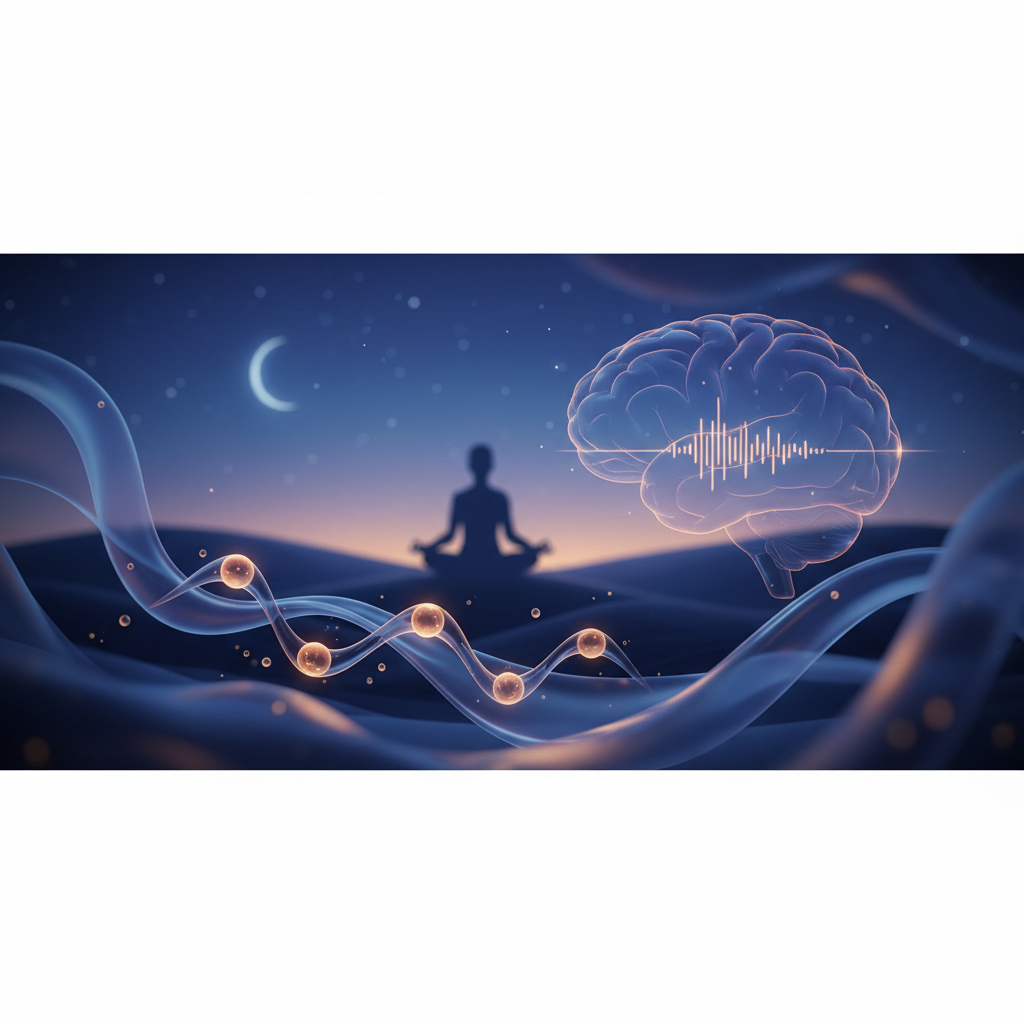
L-theanine is unusual among calming compounds in that it doesn't produce sedation. It produces relaxation without drowsiness — a state that can be measured directly on EEG as increased alpha wave activity, the brain wave pattern associated with relaxed alertness.
L-theanine is the rare compound that quiets the nervous system without dimming cognitive function. It supports both relaxation and focus simultaneously, which most calming agents cannot do.
What L-theanine does
L-theanine is an amino acid found almost exclusively in tea leaves (especially green tea) and certain mushrooms. It crosses the blood-brain barrier and affects multiple neurotransmitter systems: it modulates GABA (inhibitory, calming), glutamate (excitatory, modulated to reduce excessive activity), and dopamine and serotonin (mood-relevant).
On EEG, L-theanine consistently increases alpha wave activity — the brain wave pattern associated with relaxed wakefulness, creativity, and meditative states. Effects appear within 30-40 minutes and persist for several hours.
L-theanine is the rare compound that quiets the nervous system without dimming cognitive function.
— Dr. Anna Nobre, PhD, University of Oxford
Clinical applications
Several clinical applications have evidence support. For acute stress, L-theanine reduces stress reactivity and physiological stress markers in controlled trials. For sleep, it shortens sleep onset and may improve sleep quality (though it is not strongly sedating). For cognitive performance under stress, it improves attention and reduces error rates.
For anxiety, L-theanine has shown effects in mild-to-moderate anxiety, though it is not a substitute for clinical anxiety treatment when needed. For ADHD-related issues, some clinical evidence exists for attention benefits when combined with caffeine.
Pairing with caffeine
L-theanine is famous for its synergy with caffeine. The combination produces sustained alertness without the jitteriness and elevated heart rate characteristic of caffeine alone. Studies have shown that L-theanine + caffeine produces better cognitive performance than either alone, with improved focus, attention, and reduced subjective tension.
This synergy has driven products marketed for 'focused calm' or 'productive concentration.' Typical combinations are 100-200mg L-theanine with 50-100mg caffeine. The combination naturally exists in green tea, though typical green tea provides lower amounts of each than supplemental doses.
What cognitive performance specialists recommend L-theanine (200mg) — alone for relaxation or combined with caffeine for focused calm — alongside the broader stress and sleep support nutrients for comprehensive nervous system care.
Sleep and stress regulation form the foundation under every other wellness intervention. Get them right, and other strategies tend to work better. Get them wrong, and even excellent diets and exercise programs deliver less than they should.
References
- Trends in Food Science — L-theanine review
- Asia Pacific Journal of Clinical Nutrition — L-theanine and stress
- Nutritional Neuroscience — L-theanine and caffeine cognitive effects
Frequently asked questions
This article is for informational purposes only and does not constitute medical advice, diagnosis or treatment. Always consult a qualified healthcare professional before starting any supplement, diet or exercise programme, especially if you are pregnant, nursing, taking medication or have a medical condition. Statements about supplements have not been evaluated by the Food and Drug Administration.
Feel Better With Us Editorial Team
Our editors research every guide from primary sources and update it when the evidence changes. Our editorial standards