
Joint & MobilityGuide
Massage Gun: Does It Work and How to Use It Safely
A massage gun is a handheld device that delivers rapid pulses to a muscle. Studies suggest it may help short-term jump performance, but a 2026 meta-analysis found no clear benefit for muscle soreness or strength, and a larger trial of 65 adults found no recovery benefit after calf exercise. Used lightly for a few minutes on large muscles it is low-risk for most healthy people, but there are places and conditions to avoid.
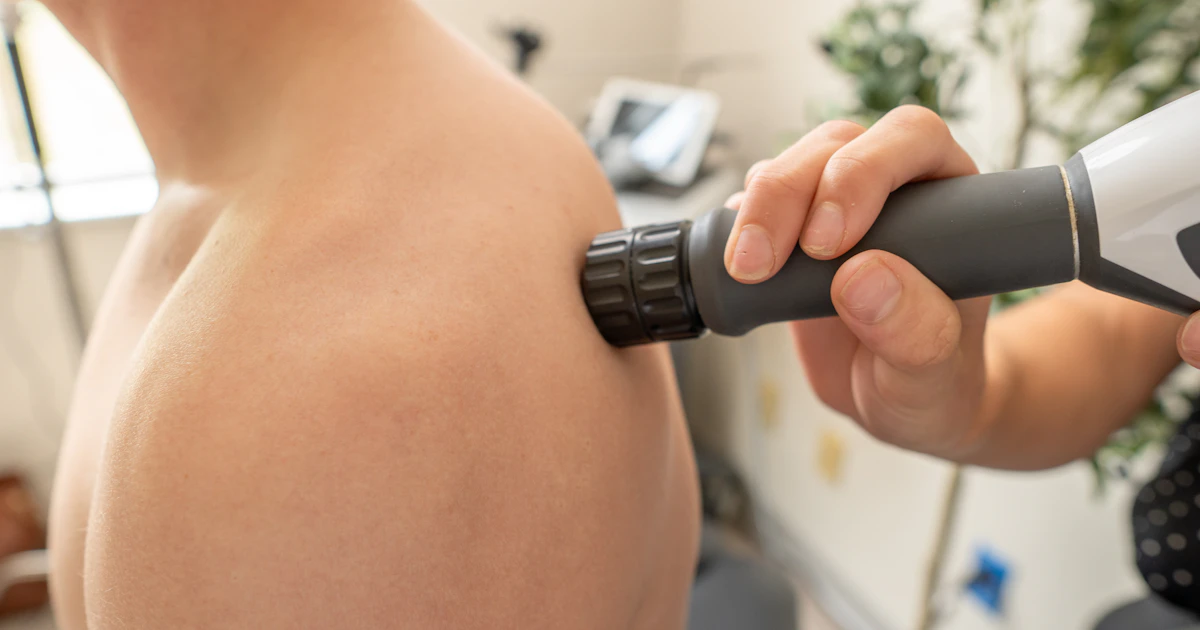
Evidence for massage guns is mixed and mostly from small studies in young, healthy people. A 2026 meta-analysis of 12 trials found a possible short-term boost in jump performance (low certainty) but no clear effect on soreness or strength. If you use one, keep pressure light, move continuously over large muscles and limit each area to a couple of minutes. Avoid bones, joints, the front of the neck, bruises, injuries and open wounds. Ask a clinician first if you take blood thinners, are pregnant or have a bone, circulation or nerve condition.
A massage gun is a handheld device that delivers rapid pulses to a muscle. Studies suggest it may help short-term jump performance, but a 2026 meta-analysis found no clear benefit for muscle soreness or strength, and a larger trial of 65 adults found no recovery benefit after calf exercise. Used lightly for a few minutes on large muscles it is low-risk for most healthy people, but there are places and conditions to avoid.
This guide explains what the research shows, how long and how hard to use a massage gun, who should be careful and how it compares with foam rolling. It is part of our joint health and mobility guide.
Quick answer
Evidence for massage guns is mixed and mostly from small studies in young, healthy people. A 2026 meta-analysis of 12 trials found a possible short-term boost in jump performance (low certainty) but no clear effect on soreness or strength. If you use one, keep pressure light, move continuously over large muscles and limit each area to a couple of minutes. Avoid bones, joints, the front of the neck, bruises, injuries and open wounds. Ask a clinician first if you take blood thinners, are pregnant or have a bone, circulation or nerve condition.
Do massage guns work? What the research shows
-
Pooled analysis. A 2026 systematic review (Zhu and colleagues) combined 12 randomized trials with 393 mostly young, healthy people. It found a possible gain in countermovement jump height (low certainty, and the result weakened after adjusting for possible publication bias), no clear effect on delayed-onset muscle soreness (DOMS, very low certainty) and no effect on maximal strength (moderate certainty). The authors call their dose findings preliminary and not prescriptive.
-
Large lab trial. In a study of 65 active adults (Leabeater and colleagues), one calf was treated for five minutes after a calf-raise workout and the other rested. Ankle mobility, strength and endurance did not differ, and soreness was no better with the device.
-
Foam roller comparison. A 2025 trial of 60 adults (Szajkowski and colleagues) compared foam rolling, a massage gun and rest after calf exercise. Pain fell in every group, including rest, with no difference between them.
-
Positive small trial. A 2025 trial of 30 young men (Li and colleagues) found less soreness and better knee movement at 48 hours with 40 minutes of percussive massage than with static stretching. The groups had only 10 people, the effect sizes were unusually large and the comparison was with stretching, not rest, so treat it cautiously.
In short, a massage gun may feel good and may help warm up, but we found no strong evidence that it speeds recovery.
How to use a massage gun
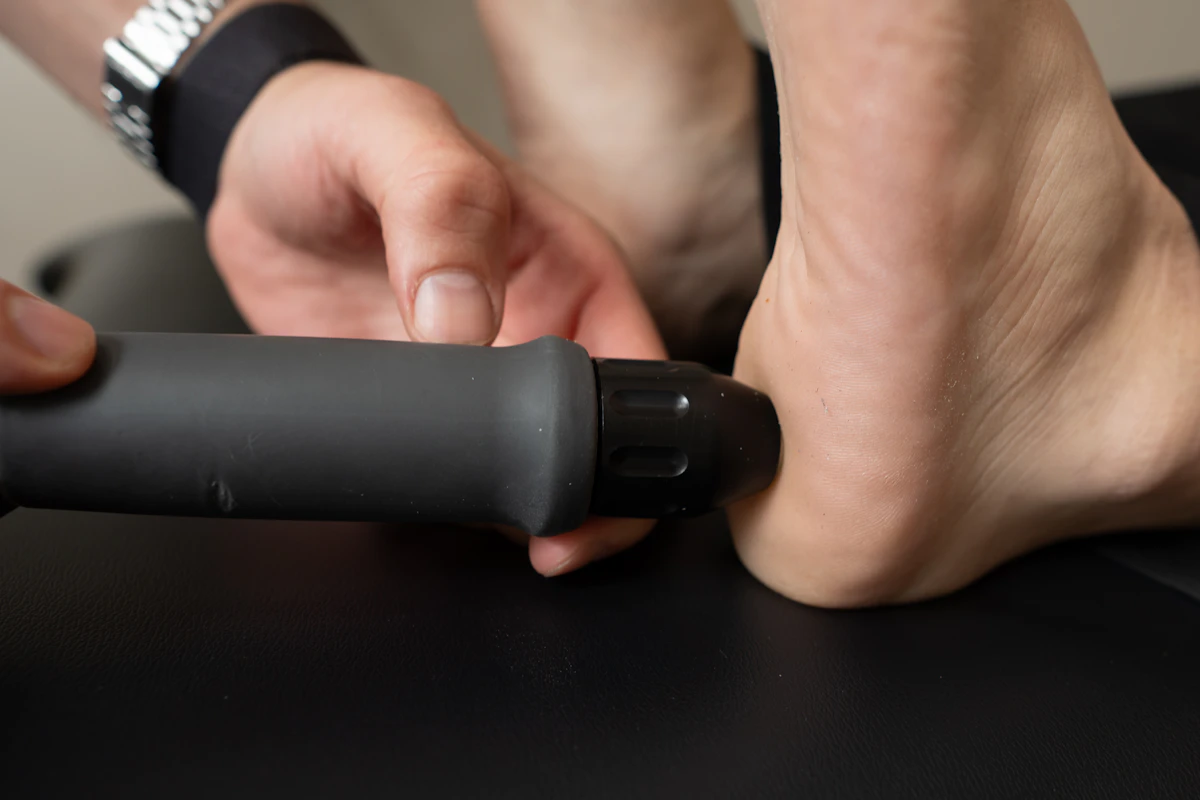
Healthline's guide to using a massage gun, written by a nurse and reviewed by a physical therapist, suggests:
-
Start on the lowest speed and use light pressure. Pressing harder does not improve results.
-
Keep it moving over large muscles such as the thighs, calves, glutes and upper back.
-
Limit time. Healthline says no more than one to two minutes per muscle group. The trials above used longer sessions (about 2.5 to 4 minutes per site, or 5 minutes on one muscle), and Leabeater and colleagues note that the manufacturers' two-minute limit has an unclear basis. There is no agreed standard.
-
Stop if you feel sharp pain, numbness or tingling.
Where not to use a massage gun
Healthline says to avoid the front of the neck, the spine, bony areas and joints (including the ankle bones), major arteries, and any swollen, bruised or broken skin. It also says to skip areas with a recent strain, sprain, torn ligament or surgery.
Who should be careful or ask a doctor first
Healthline lists osteoporosis or a recent fracture, deep vein thrombosis, diabetic neuropathy, joint replacement in the area, peripheral vascular disease and nerve pain or reduced sensation. People taking blood thinners can bruise more deeply and should avoid strong pressure. During pregnancy, Healthline advises avoiding the lower back, abdomen and pressure points, and asking a clinician first if you have complications. None of the studies we read tested these groups, so the advice comes from a consumer article.
Are massage guns risky?
Most trials reported no adverse events. Leabeater and colleagues cite two case reports: rhabdomyolysis (muscle breakdown) in a young athlete after 10 minutes of use by a coach, and a hemothorax (blood in the chest cavity) after regular use on the chest and back. These are rare and not proof of cause, but the authors recommend caution right after strenuous lower-body exercise. See a doctor promptly for dark urine, severe pain, swelling or weakness after use.
Massage gun vs foam roller
In the 2025 trial, foam rolling and the massage gun gave similar pain results to rest. A 2019 review found small effects for foam rolling on flexibility and soreness (see our guide to the foam roller). A foam roller costs less, and there are no head-to-head trials proving either is better. For warm-up and cool-down routines, also read should you stretch before or after a workout.
When to see a doctor
See a doctor if pain is sharp, lasts more than a few days, follows an injury, or comes with swelling, numbness, dark urine or leg pain and swelling on one side. Do not use a massage gun to treat an injury yourself.
FAQ
Do massage guns actually work?
They may help short-term jump performance, but the research does not show clear benefits for soreness or strength.
How long should I use a massage gun on one muscle?
Healthline says one to two minutes per muscle group. Studies used longer, so there is no agreed standard. Start short.
Is a massage gun better than a foam roller?
No trial shows one is better. In one study both gave the same pain relief as rest.
Can a massage gun help sore muscles?
Evidence is weak. A meta-analysis found no clear effect on soreness.
Are massage guns safe?
For most healthy people, with light pressure, yes. Rare serious cases are reported. Avoid bones, joints, the neck and injuries.
Who should not use a massage gun?
People with fractures, clots, nerve or circulation problems, joint replacements, or on blood thinners should ask a clinician first.
Related guides: exercise and joint health, cold and heat therapy for joint pain, magnesium and the muscle-joint connection.
This article is for general information and is not medical advice. Talk to a doctor or physical therapist about pain, injury, pregnancy or any health condition before using a massage gun.
Frequently asked questions
This article is for informational purposes only and does not constitute medical advice, diagnosis or treatment. Always consult a qualified healthcare professional before starting any supplement, diet or exercise programme, especially if you are pregnant, nursing, taking medication or have a medical condition. Statements about supplements have not been evaluated by the Food and Drug Administration.
Feel Better With Us Editorial Team
Our editors research every guide from primary sources and update it when the evidence changes. Our editorial standards