
Keratin Production and Nutrients: The Building Blocks of Strong Hair
Keratin is the structural protein that makes hair what it is — and its production depends on specific nutrients.
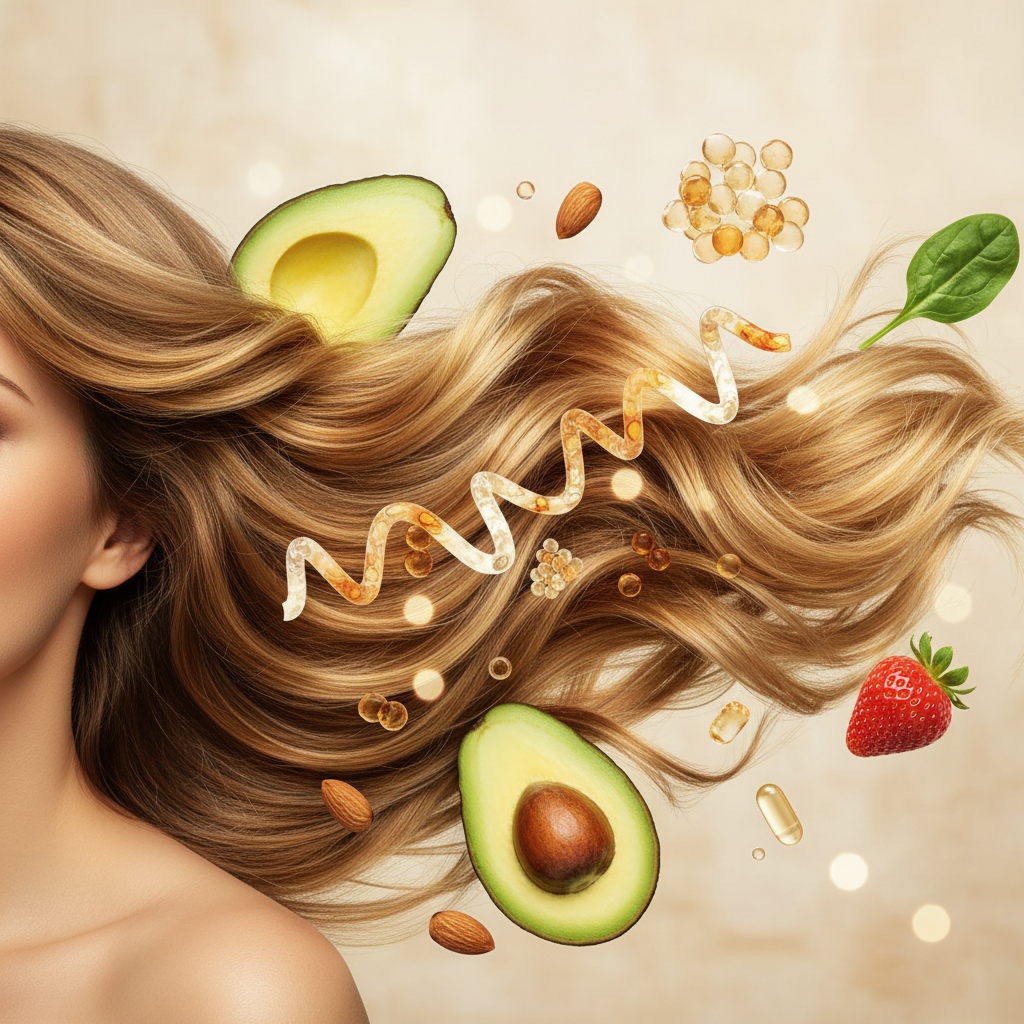
Hair is essentially a structure of keratin proteins, organized into characteristic patterns. The visible strand emerging from the follicle is dead protein matter, but the living follicle below the surface continuously synthesizes new keratin under direct nutritional control.
This means that hair quality reflects nutritional status with several months of delay. Today's hair grew from cellular machinery that was operating months ago. Today's nutritional choices will be visible months from now.
What keratin is
Keratin is a fibrous structural protein composed primarily of amino acids — particularly cysteine, which forms the disulfide bonds that give hair its tensile strength and shape. It is one of the toughest biological materials, designed to withstand mechanical stress, chemical exposure, and weathering.
The keratin in your hair is structurally similar to the keratin in your nails and the outer layer of your skin. All three depend on the same nutritional building blocks and biochemical machinery for their production.
Hair changes are often the body's earliest visible signal of nutritional shift. We just need to learn to read them.
— Dr. Wilma Bergfeld, MD, Cleveland Clinic
Key nutrients required
Adequate dietary protein is foundational — keratin synthesis cannot proceed without amino acid availability. Cysteine specifically is critical and is found in eggs, poultry, and dairy. Methionine (an essential amino acid that converts to cysteine) is found in similar sources.
Iron is essential for the rapid cell division of follicle matrix cells. Zinc supports the enzymes that build disulfide bonds in keratin. B vitamins (especially biotin and B12) participate in the metabolic pathways of keratin synthesis. Vitamin C supports the iron utilization required for follicle activity.
Signs of inadequate production
Hair changes are often the body's earliest visible signal of nutritional shift. Increased shedding, slowed growth, brittleness, dullness, and changes in texture all reflect changes in keratin production.
Because hair grows in cycles spanning years, nutritional changes often produce visible effects 3–6 months after the underlying shift. This delay can make the connection difficult to identify without specifically looking for it.
What dermatologists recommend A comprehensive hair-targeted nutrient profile — including high-quality protein support, iron, zinc, B vitamins, and vitamin C — designed to provide the building blocks and cofactors that keratin synthesis requires.
Skin and hair are visible witnesses to internal biochemistry. The visible surface tells a story about underlying nutritional status, hormonal balance, and inflammatory tone — and listening to that story carefully can reveal what to address from the inside out.
References
- British Journal of Dermatology — Nutritional factors in hair health
- Dermatology Practical & Conceptual — Hair growth nutrients
- Journal of Cosmetic Dermatology — Protein and amino acid intake for hair
Frequently asked questions
This article is for informational purposes only and does not constitute medical advice, diagnosis or treatment. Always consult a qualified healthcare professional before starting any supplement, diet or exercise programme, especially if you are pregnant, nursing, taking medication or have a medical condition. Statements about supplements have not been evaluated by the Food and Drug Administration.
Feel Better With Us Editorial Team
Our editors research every guide from primary sources and update it when the evidence changes. Our editorial standards