
Fiber Types and Fermentation: Why Variety Matters More Than Quantity
Different fibers feed different bacteria — and the diversity of your fiber sources shapes your microbiome.
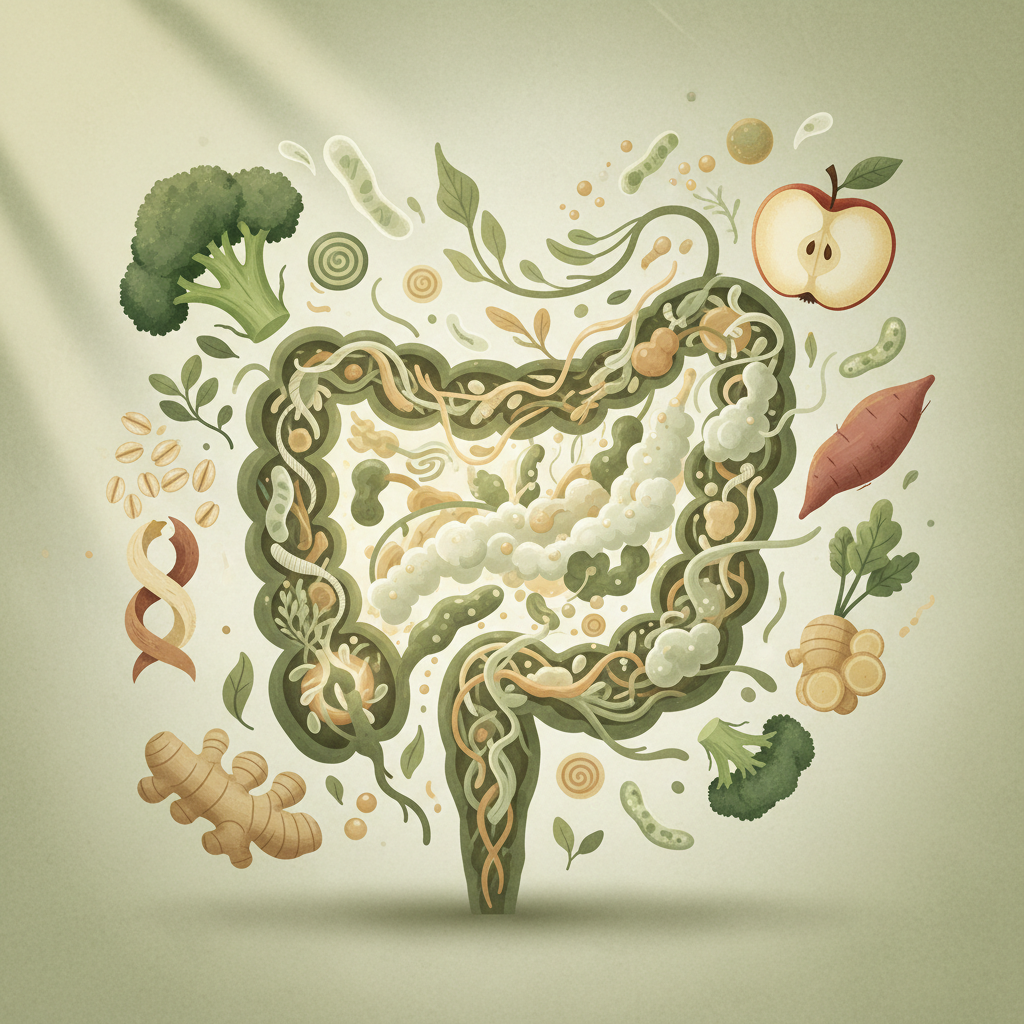
Most fiber discussions treat the nutrient as a single entity. The reality is far more interesting. There are dozens of distinct fiber types, each with different fermentation patterns and different effects on gut bacterial populations.
Eating 30 grams of fiber from a single source is metabolically different from eating 30 grams from 15 different sources. The latter feeds a more diverse microbiome — and produces a more diverse metabolic output.
Soluble vs insoluble fiber
The classic dichotomy distinguishes soluble fiber (which dissolves in water and is fermented by gut bacteria) from insoluble fiber (which adds bulk and accelerates transit time). Both matter, but they do different work.
Soluble fiber — found in oats, legumes, fruits, and psyllium — is the substrate for SCFA production through bacterial fermentation. Insoluble fiber — in whole grains, vegetables, and nuts — supports regular bowel function and may bind bile acids and toxins for excretion.
Different fiber types feed different bacterial populations. Diversity in the diet creates diversity in the gut.
— Dr. Hannah Holscher, PhD, RD, University of Illinois
Resistant starch and inulin
Resistant starch — found in cooled cooked potatoes, green bananas, legumes, and resistant starch supplements — escapes small intestinal digestion and reaches the colon, where it preferentially feeds butyrate-producing bacteria. It produces some of the highest butyrate yields of any fiber type.
Inulin and FOS, found in onions, garlic, leeks, asparagus, and chicory root, feed Bifidobacteria preferentially. Beta-glucan in oats and barley feeds different populations. Pectin in apples and citrus feeds yet another group. The categorical specificity is significant.
Practical fiber diversity
Aim for variety, not just quantity. Different beans on different days, different fruits, mixed nuts and seeds, multiple vegetable types per meal — all increase microbiome diversity. Cooking and cooling starches creates resistant starch.
Increase intake gradually. A sudden jump from low to high fiber can cause significant bloating and gas as gut bacteria adapt. Allow 2–4 weeks of progressive increases for tolerance to develop. Hydrate adequately.
What gut nutrition specialists recommend A diverse prebiotic supplement combination — providing multiple fiber types (inulin, FOS, GOS, beta-glucan, resistant starch) — alongside dietary plant variety to maximize microbiome support.
The science continues to refine itself, but the practical guidance is clear enough to act on. Foundations first; targeted support where the evidence is solid; patience for the body's own rhythms of repair and adaptation.
References
- Cell Host & Microbe — Fiber-microbiome interaction review
- Nutrients — Resistant starch and butyrate production
- American Journal of Clinical Nutrition — Fiber diversity and microbiome composition
Frequently asked questions
This article is for informational purposes only and does not constitute medical advice, diagnosis or treatment. Always consult a qualified healthcare professional before starting any supplement, diet or exercise programme, especially if you are pregnant, nursing, taking medication or have a medical condition. Statements about supplements have not been evaluated by the Food and Drug Administration.
Feel Better With Us Editorial Team
Our editors research every guide from primary sources and update it when the evidence changes. Our editorial standards